
Fostering Meaning in a Post-Work Era


When “What Do You Do?” Stops Making Sense

Imagine waking up one morning and realizing the question that once defined you—“What do you do?”—no longer carries the same weight. No job title to lean on. No productivity badge to flash. Just you, a day ahead, and the unsettling freedom to decide what matters.

As we move toward a post-work era shaped by automation, AI, and shifting cultural values, meaning is no longer something handed to us by employers. It becomes something we must actively cultivate. This article explores how purpose evolves when work steps off center stage—and how meaning can flourish when we design life beyond labor.


1. The Quiet Identity Crisis No One Prepared Us For

When the workday ends forever, who are you on Monday morning?

For decades, work has been the backbone of identity. Sociologists note that employment has functioned as a social shortcut—instantly communicating status, skills, and belonging. A 2023 Gallup report found that over 60% of adults still strongly associate self-worth with occupational success.

In a post-work era, that shortcut disappears. This can feel disorienting, even painful. Yet history tells a different story: human meaning existed long before modern jobs. Philosopher Bertrand Russell argued that excessive devotion to work crowds out joy, curiosity, and wisdom.

As author Yuval Noah Harari puts it, “The big question of the 21st century is not how to work harder, but how to live meaningfully when work is no longer central.”

Rewrite your personal bio without referencing employment—focus on what you care about and what you give.


2. Meaning Shifts from Achievement to Alignment

Success feels empty when it’s no longer aligned with who you are.

Without work as the primary scoreboard, meaning becomes less about achievement and more about alignment—living in harmony with your values. Psychological research from the University of Pennsylvania shows that value-driven living correlates with lower depression and higher life satisfaction.

This shift reframes purpose as an internal compass rather than an external reward. You don’t arrive at meaning; you stay oriented toward it.

Viktor Frankl, Holocaust survivor and psychiatrist, famously said, “Life is never made unbearable by circumstances, but only by lack of meaning.”

Identify your top three values and audit how your time reflects—or contradicts—them.


3. Time Becomes the New Sacred Resource

When time is no longer sold, it becomes sacred.

In a post-work era, time is reclaimed—but not automatically cherished. Studies from the University of California show that people with more free time are happier only when they use it intentionally. Otherwise, boredom and anxiety creep in.

Meaning arises when time is treated as a living resource—something to be invested in relationships, learning, and reflection. The ancient Greeks called this scholé, the root of the word “school,” meaning time for thought.

Writer Annie Dillard captured it perfectly: “How we spend our days is, of course, how we spend our lives.”

Design your week around energy and curiosity, not obligations alone.


4. Contribution Replaces Career

You don’t need a job to matter—you need impact.

In the absence of formal employment, contribution becomes the new social glue. Research published in Psychological Science shows that people who feel useful to others report significantly higher levels of meaning, regardless of income.

Contribution can look like caregiving, mentoring, creating, or simply showing up consistently for others. Communities thrive not on résumés, but on reliability and care.

As activist and writer adrienne maree brown says, “What we practice at the small scale sets the pattern for the whole system.”

Ask regularly: “Who benefits from how I spend my time?”


5. Learning Becomes a Lifelong Identity

When you stop working, learning doesn’t stop—it finally gets curious.

Without career ladders to climb, learning shifts from credential-chasing to exploration. Neuroscience research shows that novelty and learning stimulate dopamine release, reinforcing motivation and well-being well into older age.

In a post-work era, learning becomes an identity in itself—a way to stay engaged with life. From philosophy to gardening to astrophysics, curiosity becomes a source of meaning.

Albert Einstein once said, “Once you stop learning, you start dying.”

Choose one subject to explore deeply each quarter—no outcomes required.


6. Rituals Replace Routines

Meaning lives in what you repeat with intention.

Work once structured our days. Without it, rituals step in—not rigid schedules, but meaningful patterns. Anthropological studies show that rituals increase emotional stability and strengthen a sense of belonging.

Morning walks, shared meals, reflection practices—these acts anchor meaning in everyday life. They remind us that life doesn’t need to be optimized to be worthwhile.

Poet Mary Oliver asked, “Tell me, what is it you plan to do with your one wild and precious life?”

Turn one daily habit into a ritual by adding intention and reflection.


Conclusion: Meaning Is a Practice, Not a Position

The post-work era doesn’t signal the end of meaning—it marks its return to human hands. When work loosens its grip, we’re invited to build purpose from values, time, contribution, learning, and ritual.

Meaning isn’t waiting in the future. It’s assembled daily, through small choices made with care.

The Meaning OS Movement isn’t about escaping work—it’s about remembering that life itself was always the main system. And it’s ready for an upgrade.

African Honey Badger

What is your favorite animal?

What if the honey badger’s spirit is already living somewhere inside you, quietly waiting to be claimed?

Consider this fearless creature for a moment…

He doesn’t go looking for trouble.
He minds his own business, walks his own path, stays focused on what matters to him.

Yet the instant something—or someone—tries to push him around, test him, corner him…
he doesn’t hesitate.
He doesn’t calculate the size of the opponent.
He doesn’t whisper, “Maybe I should just let this go.”

No.

He turns, locks eyes, and fights—with absolute, bone-deep commitment.
A leopard? Bring it.
A lion? Come try.
An elephant twenty times his size?
He still charges.

Not because he’s reckless.
But because he has already decided—deep in his core—that no one gets to decide his worth, his boundaries, or how much he’s allowed to take.

Now pause and ask yourself:

Where in your life have you been minding your business beautifully…
but when the pressure came, when the challenge showed up, when someone or something tried to make you smaller…
did you quietly step back instead of stepping forward?

What would change if you carried even a fraction of that same unapologetic resolve?

What would it feel like to look at the next “leopard” in your path and think—not with arrogance, but with calm certainty—
“I don’t start fights… but if you bring one to me, I finish them.”

You don’t have to become mean.
You don’t have to become loud.
You simply have to become undeniable.

So here’s the question that matters most right now:

What part of the honey badger are you ready to wake up inside yourself today?
Because that part isn’t waiting for permission.
It’s already looking at you… waiting for you to say yes.

So… are you ready to say it?

Fostering Meaning in a Post-Work Era


When the Job Title Fades, What’s Left?

Picture work as the scaffolding around a building. For decades, it’s given our days structure, identity, and a sense of progress. But now, as automation, AI, and shifting values quietly dismantle that scaffolding, many of us are left standing inside the building asking, “Okay… now what?”

This article explores how meaning doesn’t disappear in a post-work era—it simply changes shape. You’ll learn how purpose can be redesigned beyond jobs, productivity, and paychecks, and how individuals and communities can cultivate a deeper, more human sense of meaning when work is no longer the main event.


1. When Work Stops Being the Center of the Universe

What happens when your calendar clears—but your mind doesn’t?

For generations, work has been the gravitational force around which life orbited. It dictated when we woke up, where we lived, and even how we introduced ourselves. In a post-work era, that gravity weakens—and that can feel both liberating and unsettling.

Research from the American Psychological Association shows that work has been a primary source of identity for over 70% of adults in industrialized societies. Remove or reduce that, and it’s no surprise many experience a sense of drift.

Philosopher Hannah Arendt warned that tying identity too tightly to labor risks hollowing out our humanity. As she put it, “What we call progress may, in fact, be a loss of the world.”

Start describing yourself without mentioning your job. Focus on values, curiosities, or contributions instead.


2. Purpose Isn’t a Paycheck—It’s a Pattern

Meaning isn’t something you earn; it’s something you practice.

In a post-work world, purpose stops being a single role and becomes a recurring pattern of actions that matter—to you and to others. Studies in positive psychology, particularly by Dr. Martin Seligman, show that meaning comes from contributing to something larger than the self, not from status or income.

A 2018 study published in The Journal of Happiness Studies found that volunteering and creative pursuits provided comparable—or greater—life satisfaction than paid employment, especially when basic needs were met.

Author and thinker David Brooks sums it up well: “Purpose is not a goal to be achieved but a relationship to be entered into.”

Identify one weekly activity that benefits someone else with no transactional reward attached.


3. From Productivity to Presence

What if doing less made life feel like more?

Without work as the main metric of worth, presence becomes the new currency. Neuroscience backs this up: mindfulness and present-moment awareness are linked to increased well-being and reduced anxiety, according to Harvard Medical School research.

In a culture obsessed with output, slowing down can feel countercultural. Yet Zen teacher Thich Nhat Hanh reminded us, “There is no way to happiness—happiness is the way.”

The post-work era invites a shift from “What did I produce today?” to “What did I experience, notice, or appreciate?”

Build a daily “unproductive” ritual—walking, journaling, or simply sitting without a screen.


4. Community as the New Career Ladder

When jobs disappear, relationships step forward.

Anthropologists have long noted that strong social bonds—not labor—are the backbone of resilient societies. The famous Harvard Study of Adult Development, running for over 80 years, consistently shows that close relationships are the strongest predictor of long-term happiness and health.

In a post-work era, community contribution replaces career advancement. You’re no longer climbing ladders; you’re strengthening circles.

As entrepreneur and community builder Seth Godin says, “People like us do things like this.” Identity forms through belonging, not résumés.

Join or create a local group centered on shared interests rather than professional networking.


5. Creativity: The Meaning Engine We Forgot

You don’t need to be paid to be creative—only brave.

When survival no longer dominates our time, creativity rushes in to fill the space. Neurological studies show that creative expression activates reward pathways associated with intrinsic motivation and long-term fulfillment.

From painting to storytelling to problem-solving, creativity becomes a way to process the world and leave a personal imprint. Musician Brian Eno once said, “Culture is what we make when we’re not making money.”

In a post-work future, creativity isn’t a luxury—it’s a lifeline.

Start a low-stakes creative project with no intention of monetizing it.


6. Designing a Life, Not Just Escaping a Job

Freedom without intention is just another kind of trap.

The post-work era isn’t about doing nothing—it’s about choosing deliberately. Life design thinkers like Bill Burnett and Dave Evans emphasize that meaning emerges from curiosity, experimentation, and reflection, not rigid plans.

A Stanford study on life design found that people who treated life as a series of prototypes reported higher resilience and satisfaction during major transitions.

As Buckminster Fuller famously said, “You never change things by fighting the existing reality. To change something, build a new model that makes the old one obsolete.”

Treat your life like a prototype—run small experiments instead of chasing one perfect answer.


Conclusion: Meaning Is the Operating System

As work loosens its grip, meaning doesn’t vanish—it migrates. From identity to community, from productivity to presence, from careers to creativity, the post-work era challenges us to upgrade our internal operating system.

The Meaning OS isn’t about rejecting work entirely—it’s about remembering that being human was always the main job. When we design lives rooted in contribution, connection, and curiosity, meaning becomes renewable.

So here’s the invitation: don’t wait for the future to hand you purpose. Start cultivating it now—one intentional choice at a time.

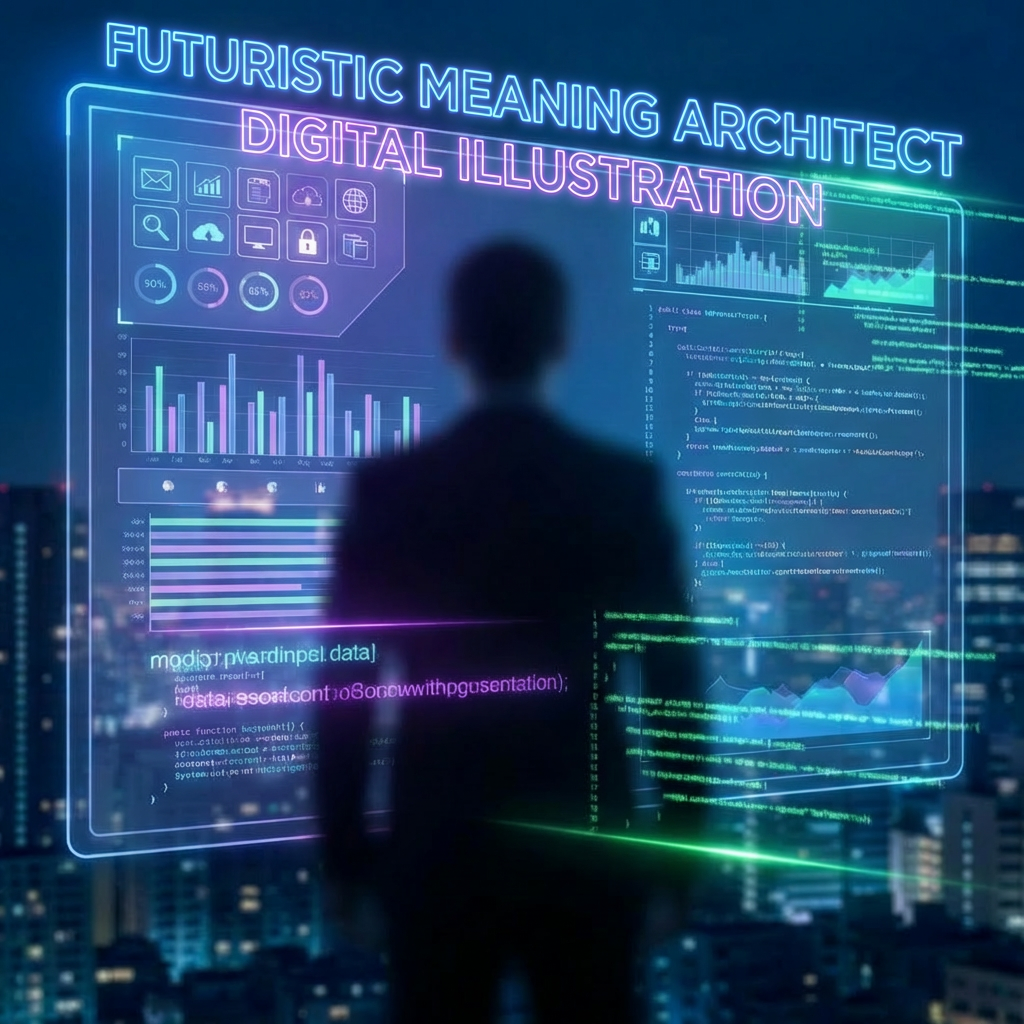
The Meaning OS Movement: Designing a Future Where AI Serves the Soul


AI is moving fast—but meaning moves deeper. And right now, depth is what the future is starving for.


Picture humanity as a high-speed train powered by artificial intelligence. The engine is flawless. The tracks are expanding. But without a clear destination, speed becomes noise. Meaning OS is the navigation system—the unseen intelligence that ensures progress is actually taking us somewhere worth going.

In this article, we’ll explore how entrepreneurs can lead the Meaning OS Movement: a shift where AI amplifies purpose, businesses become vehicles for impact, and success is measured not just in growth—but in significance.


1. The Crisis Beneath the Code: Why Intelligence Alone Isn’t Enough


What happens when the smartest systems in history can’t answer the simplest human question: Why?

AI excels at optimization, yet anxiety, burnout, and disconnection continue to rise. The issue isn’t technology—it’s the absence of meaning guiding it. Entrepreneurs now face a defining choice: build faster, or build wiser.

Psychiatrist Carl Jung once said, “People will do anything, no matter how absurd, to avoid facing their own soul.” AI forces that confrontation. It strips away busyness and exposes what truly matters.

Before scaling any AI-driven solution, define the human problem it serves in emotional—not technical—terms.

Research published in Nature Human Behaviour shows that a strong sense of meaning reduces stress and improves resilience, even in high-performance environments.


2. Entrepreneurs as Meaning Architects


The next generation of founders won’t just design products—they’ll design inner worlds.

Every platform shapes behavior. Every algorithm nudges attention. That makes entrepreneurs the unseen architects of human experience. Meaning OS begins when builders take responsibility for that influence.

Elon Musk once noted, “Technology is just a tool. The real question is what kind of future we want.” Meaning-first entrepreneurs answer that question intentionally.

Write a “meaning brief” alongside your technical specs—clarifying how your product should make people feel, think, or grow.

A McKinsey study found that mission-driven companies retain talent 40% more effectively than those focused solely on performance metrics.


3. AI as a Force Multiplier for Purpose


AI doesn’t dilute meaning—it magnifies whatever you feed it.

When guided by intention, AI becomes a force multiplier for purpose. It can personalize education, expand access to mental health support, and free humans from soul-draining tasks.

Feeding AI with clarity is essential. As author Yuval Noah Harari warns, “Technology is never neutral. It amplifies human intent.”

 Audit your AI workflows quarterly and ask: Is this increasing human agency—or replacing it?

Stanford research shows that AI systems designed with human-centered goals significantly outperform purely efficiency-driven models in long-term adoption.


4. From Hustle Culture to Conscious Creation


Burnout is a signal—not a failure.

AI exposes the unsustainable nature of hustle culture. When machines handle execution, human value shifts toward creativity, wisdom, and presence. Meaning OS reframes work as contribution, not exhaustion.

Arianna Huffington famously said, “Burnout is not the price you pay for success.” Entrepreneurs aligned with Meaning OS build companies that honor life, not consume it.

Replace at least one productivity KPI with a well-being or impact metric. What you measure shapes what you build.

The World Health Organization recognizes burnout as an occupational phenomenon, while studies show that well-being-focused companies outperform peers financially over time.


5. Trust Is the New Currency


In a world of synthetic content, authenticity becomes priceless.

As AI-generated experiences increase, trust becomes the ultimate differentiator. Meaning-driven brands earn loyalty by being transparent, ethical, and human—even when powered by advanced technology.

Salesforce CEO Marc Benioff states, “Trust is the most important value of our time.” Meaning OS embeds trust at the core, not as a compliance checkbox.

Be explicit about where and how AI is used in your business—clarity builds confidence.

Edelman’s Trust Barometer reports that companies seen as ethical and purpose-led are trusted nearly twice as much as those that are not.


6. Turning Companies into Movements


Products fade. Movements endure.

When meaning becomes the operating system, businesses evolve into platforms for collective identity. Customers don’t just buy—they belong. Employees don’t just work—they participate.

Seth Godin captured this shift perfectly: “A movement happens when people choose to enroll.” Meaning OS invites that enrollment through shared values.

Articulate your mission as an invitation, not a slogan. Make it something people can live, not just consume.

Research from Harvard shows that brands with strong communities grow revenue up to 2.5x faster than competitors.


Conclusion: The Future Runs on Meaning

AI will continue to accelerate. That part is inevitable. What’s not inevitable is whether we let speed replace soul. The Meaning OS Movement is a declaration that progress without purpose is incomplete—and that entrepreneurs are uniquely positioned to lead this recalibration.

The future doesn’t need more intelligence alone.
It needs direction, depth, and devotion to what makes us human.

Build the tech.
But lead with meaning.

Installing Meaning OS: Why the Next Upgrade Isn’t Artificial—It’s Human


We’ve upgraded our phones a hundred times—but when was the last time we upgraded our sense of purpose?


Think of your life and business like a powerful device. You’ve added apps for productivity, speed, and scale. You’ve optimized performance. But without a clear operating system for meaning, even the most advanced machine eventually glitches. Meaning OS is that foundational layer—the invisible code that tells everything else why it exists.

In this post, you’ll explore how entrepreneurs can lead a new era where AI amplifies meaning instead of erasing it—and how installing Meaning OS can transform your work into a movement.


1. The Real Bug in the System: Success Without Significance


Ever hit a milestone and felt… oddly empty?

Entrepreneurs are achieving more than ever, yet burnout is at record highs. The problem isn’t ambition—it’s direction. AI accelerates output, but it can’t answer the deeper question: Why does this matter?

Psychologist Viktor Frankl famously said, “Those who have a ‘why’ to live can bear almost any ‘how.’” AI gives us infinite “hows,” but meaning supplies the “why.”

Before adopting any new AI tool, write a one-sentence purpose statement explaining how it serves human well-being—not just efficiency.

A Gallup study found that employees who feel their work has purpose are 3.7x more engaged than those who don’t.


2. AI as a Mirror, Not a Master


What if AI isn’t here to replace us—but to reveal us?

AI reflects human intent at scale. If we feed it fear, it multiplies fear. If we feed it meaning, it magnifies impact. Entrepreneurs who treat AI as a mirror—rather than a master—stay grounded in agency and values.

Satya Nadella, CEO of Microsoft, said, “The real challenge is not whether machines can think, but whether humans can think well about how they use machines.”

Use AI for reflection—summarize customer stories, analyze mission alignment, and spot where your actions drift from your values.

MIT research shows that human–AI collaboration outperforms either humans or AI alone when decision-making includes ethical framing.


3. From Productivity to Presence: The New Entrepreneurial Edge


What if the future advantage isn’t speed—but depth?

AI can reclaim time. The question is what we do with it. The entrepreneurs shaping the future are redirecting saved hours toward presence: deeper thinking, better relationships, and long-term vision.

Author and entrepreneur Naval Ravikant notes, “The most important skill is knowing how to spend your time.” AI gives us that choice back—if we’re conscious enough to take it.

Create a “meaning block” in your calendar each week—time intentionally protected for reflection, learning, or mentoring.

Studies in positive psychology show that intentional reflection improves decision quality by up to 23%.


4. Building Businesses That Feel Alive


People don’t fall in love with products—they fall in love with what products stand for.

In the Meaning OS era, brands aren’t just utilities; they’re belief systems. AI-powered businesses that communicate empathy, values, and clarity create emotional resonance at scale.

Steve Jobs once said, “The technology alone is not enough—it’s technology married with liberal arts and the humanities that yields the results that make our hearts sing.”

Audit your AI touchpoints—chatbots, emails, automations—and rewrite them in a voice that sounds unmistakably human.

Harvard Business Review reports that emotionally connected customers are more than twice as valuable as highly satisfied ones.


5. Ethical Design Is Spiritual Design


Every line of code carries a belief.

Ethics in AI isn’t just a legal issue—it’s a meaning issue. What you automate reflects what you value. Conscious entrepreneurs treat ethics as part of their spiritual architecture, not an afterthought.

AI ethicist Timnit Gebru has said, “What we build reflects who we are—and who we prioritize.” Meaning OS demands intentional prioritization of humanity.

Establish a simple ethical checklist for AI decisions: Who benefits? Who might be harmed? What human value is preserved?

 PwC research shows that trust is the top factor influencing whether people adopt AI-driven services.


6. From Company to Movement: Meaning That Scales


Movements outlast markets.

When meaning becomes your operating system, growth stops being just expansion—it becomes transmission. Customers turn into advocates. Teams turn into communities. Businesses turn into movements.

As entrepreneur and author Seth Godin puts it, “People don’t buy goods and services. They buy relations, stories, and magic.” Meaning is the magic that scales without losing its soul.

Invite your audience into the mission—share your “why” publicly and consistently, and let them co-create the journey.

 Purpose-led companies outperform the stock market by up to 400% over the long term, according to multiple longitudinal studies.


Welcome to Meaning OS

AI is not the end of meaning—it’s the moment meaning becomes non-negotiable. As entrepreneurs, we’re not just building tools; we’re shaping the inner lives of millions through what we create.

Meaning OS is the upgrade that aligns intelligence with intention, speed with soul, and innovation with wisdom. Install it early. Run it daily. And remember: the future doesn’t just need smarter systems—it needs truer ones.

This isn’t just a business strategy.
It’s a way of being.

Meaning OS Movement

Your Inner System For An Age Of AI

Skip to content ↓